
Pages Menu
Categories Menu
EU considers energy savings goal below 30 percent

EU considers energy savings goal below 30 percent

The European Commission is considering an energy saving goal for 2030 of less than 30 percent, according to a document seen by Reuters, setting it at odds with designated Commission President Jean-Claude Juncker. How ambitious an energy efficiency goal the European Union should set has taken on increased urgency in the context of the Ukraine crisis because using less energy would curb the EU’s reliance on Russian gas.

Read More
Sustainables jobs surge fades as wind farms face axe

Sustainables jobs surge fades as wind farms face axe

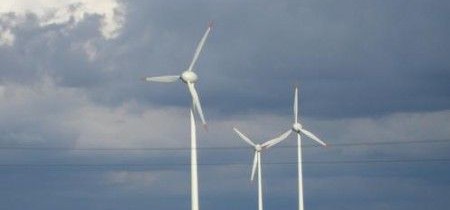
The so-called “green jobs” boom in renewable energy has not lived up to the hype. As government policy flip-flops in favour of one form of energy to another – one minute offshore wind, the next minute, fracking – investors are losing faith. In March, SSE, the big energy company, announced a freeze to its bills until 2016, at the expense of 500 jobs and its involvement with several offshore wind parks. In the past year too, the second phase of the world’s largest offshore wind farm, the London Array, was scrapped; energy group RWE ditched its Atlantic Array and Scottish Power Renewables dropped plans for an Argyll Array.

Read More
Eight ways climate change is making the world more dangerous

Eight ways climate change is making the world more dangerous

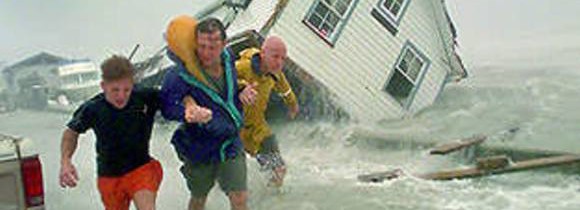
Forget the future. The world already is nearly five times as dangerous and disaster prone as it was in the 1970s, because of the increasing risks brought by climate change, according to a new report from the World Meteorological Organisation. The first decade of the 21st century saw 3,496 natural disasters from floods, storms, droughts and heat waves. That was nearly five times as many disasters as the 743 catastrophes reported during the 1970s – and all of those weather events are influenced by climate change.

Read More
En Espagne, un chantier de stockage de gaz sous-marin a provoqué mille séismes

En Espagne, un chantier de stockage de gaz sous-marin a provoqué mille séismes

Il n’y a plus de doute. Le projet Castor est bien le responsable de la vague de séismes qui a secoué le sud de la Catalogne et le nord de la communauté de Valence à l’automne 2013. Cet ancien gisement pétrolier sous-marin situé à 21 km de la côte espagnole et à 1 800 m de profondeur, transformé en entrepôt de gaz, devait permettre de stocker sous la mer l’équivalent de trois mois de la consommation de gaz dans la région de Valence, pour faire face aux pics de consommation ou à d’éventuelles ruptures d’approvisionnement.

Read More
Centro per un Futuro Sostenibile Via degli Zingari, 15 - 00184 Roma (tel. +39 06.87570009)