
Pages Menu
Categories Menu
Here’s why oil companies should be a lot more profitable than they are

Here’s why oil companies should be a lot more profitable than they are

The 40 percent plunge in oil prices since July, when Brent crude peaked at $115 a barrel, is almost certainly good news for the world economy; but it is surely a crippling blow for oil producers. Oil prices below $70 certainly spell trouble for U.S. and Canadian shale and tar-sand producers and also for oil-exporting countries such asVenezuela, Nigeria, Mexico and Russia that depend on inflated oil revenues to finance government spending or pay foreign debts. On the other hand, the implications of lower oil prices for the biggest U.S. and European oil companies are more ambiguous and could even be positive.

Read More


Testing the Limits of European Ambitions on Emissions

Testing the Limits of European Ambitions on Emissions

The European Union has long been a world leader on climate change, and its new agreement to cut greenhouse gas emissions 40 percent from 1990 levels by 2030 keeps it at the forefront of that effort. But experts question whether the plans European leaders have sketched out are strong enough to meet their ambitious goal, and even whether a 40 percent cut is enough to keep the Continent on track toward its longer-term target, an emissions cut of between 80 percent and 95 percent by mid-century. 

Read More
Will Lima climate talks pave way for a binding treaty in Paris in 2015?

Will Lima climate talks pave way for a binding treaty in Paris in 2015?

When, on Monday morning in Peru, 4,000 diplomats from the world’s 196 countries start their mammoth session to negotiate a new legally-binding global climate deal, they will know they are in the last chance saloon. COP 20 in Lima is the last full meeting before Paris in a year’s time, when the deal is due to be signed. If countries cannot bury most of their differences on the major issues by Friday week, then the chances of a meaningful agreement next year are slim.

Read More
The ZEV’s invisible tailpipe

The ZEV’s invisible tailpipe

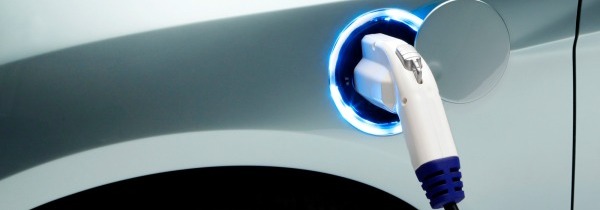
Whether they want to or not, carmakers are having to rush out all manner of zero-emission vehicles (ZEVs)—ie, plug-in electric vehicles that use either rechargeable batteries or hydrogen fuel-cells to drive the wheels. Three years ago only two plug-in electric vehicles—the Nissan Leaf and the Chevrolet Volt—were available in America, and even then in only a handful of states. Today, no fewer than 20 different models are on sale across the country.

Read More
NRG Seeks to Cut 90% of Its Carbon Emissions

NRG Seeks to Cut 90% of Its Carbon Emissions

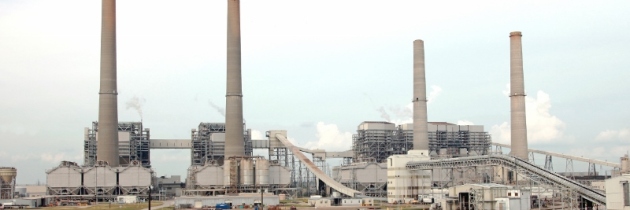
NRG, which built a leading electricity business from coal and other conventional power plants, is aiming to reduce its carbon emissions 50 percent by 2030 and 90 percent by 2050, the company said on Thursday. David Crane, the company’s chief executive, made the announcement at a ceremony breaking ground for the company’s new headquarters in Princeton, N.J., conceived as a green-energy showcase that will open in 2016.“The power industry is the biggest part of the problem of greenhouse gas emissions, but it has the potential to be an even bigger part of the solution,” Mr. Crane said in an interview before the announcement.

Read More
Ineos to invest up to £640m in UK shale gas

Ineos to invest up to £640m in UK shale gas

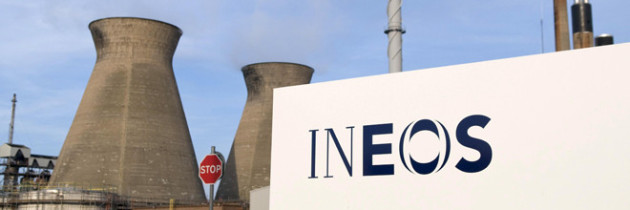
Petrochemicals giant Ineos has unveiled plans to invest up to $1bn (£640m) in drilling hundreds of wells to explore for shale gas across northern England and Scotland. The company said it had applied for numerous exploration blocks in an ongoing licensing round run by the Department of Energy and Climate Change and, if successful, it would become “the biggest player in the UK shale gas industry”.

Read More
Centro per un Futuro Sostenibile Via degli Zingari, 15 - 00184 Roma (tel. +39 06.87570009)