Pages Menu
Categories Menu
EU Carbon Drops Most in a Week as Offset Swap Misses Estimates

EU Carbon Drops Most in a Week as Offset Swap Misses Estimates

European Union carbon permits fell the most in a week as data showed emitters exchanged fewer United Nations offsets than estimated for the EU contracts, signaling lower future demand. Emitters swapped 133 million metric tons of Certified Emission Reductions and Emission Reduction Units through the end of April under a system begun around March 18, the European Commission said today in a statement on its website. That was less than half of the 300 million tons projected by Bloomberg New Energy Finance. Factories, power stations and airlines in the EU carbon market, the world’s biggest by traded volume, can use cheaper offset credits for part of their compliance needs.

Read More
Mexico’s energy reforms to be delayed

Mexico’s energy reforms to be delayed

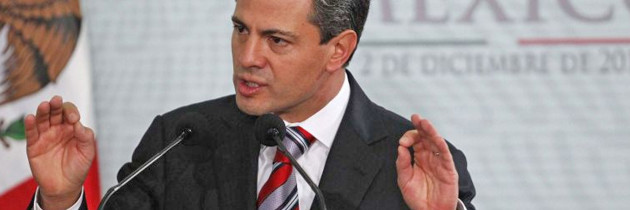
Political infighting, poorly-drafted laws and an intense workload have delayed Mexico’s groundbreaking energy overhaul, potentially denting investor hopes about the country’s ambitious reform programme that so far has promised more than it has delivered. President Enrique Peña Nieto last year pushed through constitutional changes required to break-up Mexico’s 76-year old energy monopoly, Pemex. But so-called secondary legislation, needed for the reform to take effect, is yet to pass through Congress. The same is true of other initiatives covering telecommunications and electoral reform.

Read more on Financial Times

Read More

Exxon, Total and Shell are finally talking about climate change

Exxon, Total and Shell are finally talking about climate change

Some of the most powerful forces of the modern world have this month entered into an engagement that puts international security at stake. “Throughout the 21st century, climate change impacts are projected to slow down economic growth, make poverty more difficult, further erode food security, and prolong existing and create new poverty traps.”  So said the world’s leading authority on climate change, the United NationsIntergovernmental Panel on Climate Change (IPCC) in its penultimate assessment report on 31 March. 

Read More
Green economy,  lo “spread positivo”

Green economy, lo “spread positivo”

Esiste anche uno spread «positivo»: secondo i dati dell’ultimo rapporto Greenitaly, realizzato da Unioncamere e Symbola, il fatturato estero dell’industria italiana tra ottobre 2008 e giugno 2012 è cresciuto più di quello francese e tedesco. Potrebbe sembrare poca cosa, se paragonato ai desolanti dati su consumi e produzione industriale nazionale, ma tutti gli indicatori confermano: sempre più nel mondo si sceglie il made in Italy. E non solo per enogastronomia e lusso, da sempre molto amati anche oltreconfine. Un esempio? La Cina è il primo mercato del tessile tecnico tricolore: le imprese locali, per centrare gli obiettivi imposti dal piano quinquennale del governo cinese sul risparmio energetico, non hanno altra scelta che acquistare macchinari progettati e assemblati nel Belpaese.

Read More
Can Shale Save Europe?

Can Shale Save Europe?

Regardless of how Russia’s foray into Ukraine finally works out, these last few weeks have offered a stark reminder of Europe’s desperate need to diversify its energy options. Although Russia has stopped short of halting gas deliveries to Ukraine or the rest of Europe, the threat remains real and worthy of concern. Russia currently supplies about a quarter of the continent’s natural gas demand, with a third of that flowing through Ukrainian transmission lines.

Read More
Canada becoming launch-pad of a global tar sands and oil shale frenzy

Canada becoming launch-pad of a global tar sands and oil shale frenzy

If you can be sure of one thing, it’s that oil companies didn’t get the United Nations’ latest memo on climate change: the world must urgently switch to clean, renewable energy. Over the next few decades, the UN report shows that a shift from fossil fuel extraction is the only way to prevent a complete destabilization of the planet – of which raging storms, droughts, and extreme weather are a taste of things to come. But as conventional oil reserves have dwindled, oil companies have done the opposite of embracing this shift: they’ve doubled-down on their business model by seeking out remote, more polluting fossil fuels, in harder-to-extract places. 

Read More
Centro per un Futuro Sostenibile Via degli Zingari, 15 - 00184 Roma (tel. +39 06.87570009)