Pages Menu
Categories Menu
China working on uranium-free nuclear plants in attempt to combat smog

China working on uranium-free nuclear plants in attempt to combat smog

China is developing a new design of nuclear power plant in an attempt to reduce its reliance on coal and to cut air pollution. In an effort to reduce the number of coal-fired plants, the Chinese government has brought forward by 15 years the deadline to develop a nuclear power plant using the radioactive element thorium instead of uranium. A team of researchers in Shanghai has now been told it has 10 instead of 25 years to develop the world’s first such plant.

“In the past, the government was interested in nuclear power because of the energy shortage. Now, they are more interested because of smog,” Professor Li Zhong, a scientist working on the project, told the Hong Kong-based South China Morning Post.

An advanced research centre was set up in January by the Chinese Academy of Sciences with the aim of developing an industrial reactor using thorium molten salt technology, the newspaper reported.

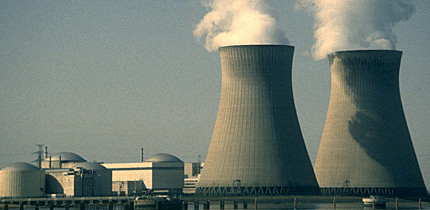
According to the World Nuclear Association (WNA), China has 20 nuclear plants in operation and another 28 under construction, all uranium-fuelled reactors. China has been importing large quantities of uranium as it attempts to reduce its reliance on fossil fuels. However, according to the WNA, thorium is much more abundant.

The researchers on the project said they had come under considerable pressure from the government for it to be successful. Li said nuclear power was the “only solution” to replace coal, and thorium “carries much hope”.

“The problem of coal has become clear,” he said: “if the average energy consumption per person doubles, this country will be choked to death by polluted air.”

“China has an ambitious nuclear-generation programme. It plans to have almost 60 gigawatts of nuclear energy by 2020 and up to 150gw by 2030, so the Chinese have plans to get a significant amount of nuclear into the energy mix,” said Jonathan Cobb of the WNA.

There is a lot that is still unknown about thorium but a lot of research is being carried out worldwide. Cobb said: “Other countries around the world are looking at thorium. There is a fair bit of research going on at the moment into the use of thorium. And technology-wise, using thorium would not be too much of a leap. It is certainly something that is well under way in terms of research,” said Cobb.

The researchers on the project told the South China Morning Post their work would be likely to face some opposition from Chinese citizens after the nuclear disaster at Fukushima, in Japan.

However, the national nuclear safety administration said the safety of China’s nuclear power plants could be assured, and checks had been stepped up since Fukushima to avoid a similar accident.

Fonte: theguardian.com

Read More


Climate change: we’ve put off the difficult decisions for too long

Climate change: we’ve put off the difficult decisions for too long

Climate change is rarely too far from the headlines, whether it is in connection with the ongoing debate about how we meet our energy needs or discussion of the prevailing weather – the latter being one of our defining national pastimes. But the headlines do not always represent an accurate picture of what we know about climate science, instead focusing more on those who either want to ignore the evidence and carry on as we are, or those who predict extreme catastrophe. Fortunately, in the UK we generally take science seriously. The latest polling data released by the government shows that a large majority of people in the UK realise that climate scientists have shown that greenhouse gases such as carbon dioxide – released in the burning of fossil fuels – trap heat in our atmosphere and warm the earth.

Read More
La Polonia si smarca dalla Russia e punta sullo shale gas

La Polonia si smarca dalla Russia e punta sullo shale gas

La Polonia sarà meno dipendente dal gas fornito dalla Russia con il rafforzamento della propria rete e potenziando lo sfruttamento delle risorse di shale gas. È il primo ministro di Varsavia ad affermarlo, guardando alla crisi Ucraina e chiedendo all’Unione europea di fare qualcosa di più per «garantire forniture sicure agli Stati membri». «Oggi possiamo dire che la Polonia è sufficientemente indipendente nell’approvvigionamento di gas. Non dovremo più sopportare alcun ricatto», ha spiegato Donald Tusk.

Read More
Big Data, for the Environment

Big Data, for the Environment

Devices that can help homeowners cut their electric bills and get to work on less fuel are getting easier to use, thanks to better data, according to Sheeraz Haji, chief executive of Cleantech Group, the research consultancy sponsoring the annual gathering. To make products smarter and more accessible to individual consumers, devices are being coupled with digital networks and analytical tools—think of Nest Labs Inc.’s smart thermostat, a product that helped prompt Google Inc. GOOG -0.40% to buy the company last January for $3.2 billion. 

Read More
Fracking is no answer to ‘immediate dilemma’ of energy security

Fracking is no answer to ‘immediate dilemma’ of energy security

Fracking might be a controversial proposition, but there is no need to panic just yet. It may be that shale is indeed the solution to our energy crisis, but many are unaware of the complex and tangled web of legal issues to be picked through before anyone puts a drill in the ground. Fracking involves the extraction of methane gas from layers of shale by pumping high pressure water down a well. But shale gas stocks are legally owned by the Crown, and it is the Crown (via the Department for Energy and Climate Change) which licenses developers to conduct shale gas exploration. 

Read More
China tells rich to do more to lead fight against climate change

China tells rich to do more to lead fight against climate change

China, the top greenhouse gas emitter, urged rich nations on Thursday to do more to lead the fight against climate change and help avert heatwaves, floods and rising sea levels. In a submission to the United Nations before a March 10-14 meeting of governments in Germany, Beijing called on developed countries to make deeper cuts in greenhouse gas emissions and increase aid to help the poor tackle global warming. They should “take the lead”, it said in a document that highlighted its deep differences with the United States despite promises of greater cooperation between the two biggest emitters of greenhouse gases. 

Read More
Centro per un Futuro Sostenibile Via degli Zingari, 15 - 00184 Roma (tel. +39 06.87570009)