
Climate Tools Seek to Bend Nature’s Path
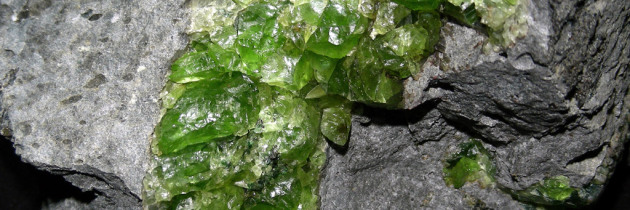
The solution to global warming, Olaf Schuiling says, lies beneath our feet. For Dr. Schuiling, a retired geochemist, climate salvation would come in the form of olivine, a green-tinted mineral found in abundance around the world. When exposed to the elements, it slowly takes carbon dioxide from the atmosphere. Olivine has been doing this naturally for billions of years, but Dr. Schuiling wants to speed up the process by spreading it on fields and beaches and using it for dikes, pathways, even sandboxes. Sprinkle enough of the crushed rock around, he says, and it will eventually remove enough CO2 to slow the rise in global temperatures.
“Let the earth help us to save the earth,” said Dr. Schuiling, who has been pursuing the idea single-mindedly for several decades and at 82 is still writing papers on the subject from his cluttered office at the University of Utrecht.
Once considered the stuff of wild-eyed fantasies, such ideas for countering climate change — known as geoengineering solutions, because they intentionally manipulate nature — are now being discussed seriously by scientists. TheNational Academy of Sciences is expected to issue a report on geoengineering later this year.
That does not mean that such measures, which are considered controversial across the political spectrum, are likely to be adopted anytime soon. But the effects of climate change may become so severe that geoengineering solutions could attract even more serious consideration. Some scientists say significant research should begin now.
Dr. Schuiling’s idea is one of several intended to reduce levels of CO2, the main greenhouse gas, so the atmosphere will trap less heat. Other approaches, potentially faster and more doable but riskier, would create the equivalent of a sunshade around the planet by scattering reflective droplets in the stratosphere or spraying seawater to create more clouds over the oceans. Less sunlight reaching the earth’s surface would mean less heat to be trapped, resulting in a quick lowering of temperatures.
No one can say for sure whether geoengineering of any kind would work. And many of the approaches are seen as highly impractical. Dr. Schuiling’s, for example, would take decades to have even a small impact, and the processes of mining, grinding and transporting the billions of tons of olivine needed would produce enormous carbon emissions of their own.
Beyond the practicalities, many people view the idea of geoengineering as abhorrent — a last-gasp, Frankenstein-like approach to climate change that would distract the world from the goal of eliminating the emissions that are causing the problem in the first place. The climate is a vastly complex system, so manipulating temperatures may also have consequences, like changes in rainfall, that could be catastrophic or benefit one region at the expense of another.
Critics also worry that geoengineering could be used unilaterally by one nation, creating another source of geopolitical worries, or could aggravate tensions between rich and poor nations over who causes and who suffers from climate change. Even conducting research on some of these ideas, they say, risks opening a Pandora’s box.
“There’s so much potential here for taking energy away from real responses to climate change,” said Jim Thomas of the ETC Group, a research organization that opposes geoengineering because of its potential impact on poor countries. As for experimentation to test some of the ideas, he said, “it shouldn’t happen.”
But a small community of scientists, policy experts and others argue that the world must start to think about geoengineering — how it might be done and at what cost, who would do it and how it would be governed.
“There may come to be a choice between geoengineering and suffering,” said Andy Parker of the Institute for Advanced Sustainability Studies in Potsdam, Germany. “And how we make that choice is crucial.”
Mimicking a Volcano
In 1991, the eruption of Mount Pinatubo in the Philippines spewed the largest cloud of sulfur dioxide gas ever measured into the high atmosphere. The gas quickly formed tiny droplets of sulfuric acid, which acted like minuscule mirrors and reflected some of the sun’s rays back into space. For the next three years, average worldwide temperatures fell by more than one degree.
One geoengineering approach would mimic this kind of volcanic action by spraying sulfuric acid droplets into the stratosphere. Planes, modified to fly higher than commercial flights, might be one way to do this at a relatively low cost. Giant tethered balloons might be another.
The dimming would not be noticeable, but computer simulations have shown that it would have a near-immediate effect on temperatures; how much would depend on the quantity and size of the droplets.
Droplets, however, do not last, so spraying would have to be continuous, and the quantities would have to be increased, in part to offset continuing carbon emissions. The process also would do nothing to remove carbon dioxide that has been absorbed by seawater and poses a threat to the oceanic food chain.
David Keith, a researcher at Harvard University and a leading expert on the subject, has suggested that if this kind of geoengineering, called solar radiation management, or S.R.M., is ever undertaken, it should be done slowly and carefully, so it could be halted if damaging weather patterns or other problems arose. The goal should only be to slow the rate that the atmosphere is warming under climate change, he said, not to reverse it.
Turning Down the Heat
Some scientists and policy makers say that the world may someday have to consider geoengineering — intentionally manipulating nature — to combat climate change.

Dr. Keith said that geoengineering and efforts to cut carbon emissions by reducing the dependence on coal and other fossil fuels were not mutually exclusive.
“We have to cut emissions,” he said. “Pretty much independent of that, we might want to do S.R.M.”
He and others argue that, rather than discouraging work to roll back emissions, discussions of geoengineering may actually encourage such efforts. If people realize that the dangers of climate change are such that geoengineering is being considered, they may work harder to avoid the need for it. “It forces people to think more about climate,” Dr. Keith said.
He added that some of the latest computer simulations showed that the effects of this kind of geoengineering would be relatively equal from region to region globally.
Pablo Suarez, who works in underdeveloped countries as associate director of the Red Cross/Red Crescent Climate Center, said he encountered this distrust when he told people about the idea.
“There is a range of reactions, the most noticeable one being, ‘Who do they think they are that they can make decisions on my behalf?’ ” Dr. Suarez said.
“It is very understandable,” he added. “No one likes to be the rat in someone else’s laboratory.”
The Green Rock Gospel
Ideas to remove carbon dioxide from the air, like Dr. Schuiling’s rock-spreading scheme, provoke less alarm. While they have issues of their own — olivine, for example, contains small amounts of metals that could contaminate the environment — as a geoengineering method they would work far more slowly and indirectly, affecting the climate over decades by altering the atmosphere.
Dr. Schuiling has been talking for years about his idea to anyone who will listen, preaching the gospel of the rock throughout the Netherlands. As a result, some residents have taken action, and the country has become something of an olivine hotbed. If you know where to look, you can see the crushed rock on paths, in gardens and in play areas.
Eddy Wijnker, a former sound engineer who was inspired by a newspaper article about Dr. Schuiling’s work, created greenSand, a company in the small town of Maasland that sells olivine sand for home or commercial use; it will soon receive a shipload from a mine in Spain. The company also sells “green sand certificates” that pay for spreading the sand along highways.
Dr. Schuiling’s doggedness has also spurred research. At the Royal Netherlands Institute for Sea Research in Yerseke, on an arm of the North Sea, Francesc Montserrat, an ecologist, is investigating the idea of spreading olivine on the seabed. Not far away in Belgium, researchers at the University of Antwerp are studying the effects of olivine on crops like barley and wheat.
But critics, including some in the geoengineering community, say that plans like Dr. Schuiling’s would work too slowly, if at all, and that undertaking them on a global scale would be close to impossible. Removing carbon dioxide from the air might be useful for some limited purposes — Dr. Keith, the Harvard researcher, has a company that is developing a machine to do so — but probably not for saving the planet.
Dr. Schuiling, who can be blunt in dismissing his critics, sees things differently. Industry extracts and transports huge quantities of coal, oil and gas, he notes, so if society decided that geoengineering was necessary, why couldn’t it do the same with olivine? The annual amount needed, equivalent to about 3,000 Hoover Dams, is available around the world and is within the limits of modern large-scale mining. “It is not something unimaginable,” he said.