
Pages Menu
Categories Menu
Ukraine’s shale gas lures western companies

Ukraine’s shale gas lures western companies

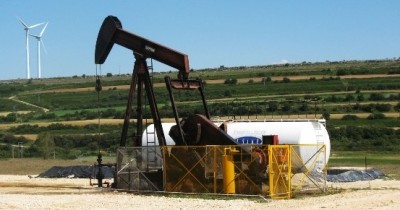
The shale gas revolution has been slow to gain momentum in Europe – held back by environmental concerns, political caution and tricky geology. But one country where it may be taking off is Ukraine. Last week, Kiev signed a potentially $10bn production-sharing agreement with Chevron of the US – its second of the year – to explore for and produce shale gas in the 6,300 sq km Oleska field in western Ukraine. In January, Royal Dutch Shell signed a similar deal covering the nearly 8,000 sq km Yuzivska field in the east of the country.

Read More

Chevron and Ukraine Set Shale Gas Deal

Chevron and Ukraine Set Shale Gas Deal

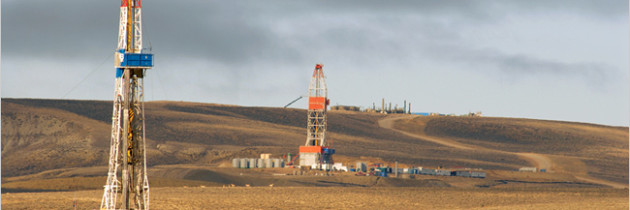
Western oil companies trying to find shale gas in Europe are discovering that Ukraine, eager to reduce its dependence on Russian energy imports, is one of their most willing partners. On Tuesday, Chevron signed a 50-year agreement with the Ukrainian government to develop oil and gas in western Ukraine. The government said that Chevron would spend $350 million on the exploratory phase of the project and that the total investment could reach $10 billion.

Read More
Shale gas, l’internazionalizzazione yuan e il confronto tra Us e Cina

Shale gas, l’internazionalizzazione yuan e il confronto tra Us e Cina

di Demostenes Floros


Carta di Laura Canali tratta da “Usa contro Cina“

A ottobre, il dollaro si è deprezzato nei confronti dell’euro sino a superare quota 1,38€/$ (record da ottobre 2011). La valuta americana ha costantemente perso terreno nei confronti della divisa europea a partire dal “congelamento” dell’intervento militare statunitense in Siria: infatti il 6 settembre il cambio quotava 1,31€/$ dopo essersi mantenuto in un range compreso tra 1,32/34€/$ durante il tesissimo mese di agosto.

Read More
Fracking Rules Set in Spain to Boost Shale Gas, Oil Work

Fracking Rules Set in Spain to Boost Shale Gas, Oil Work

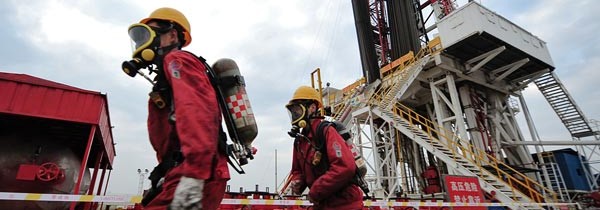
Spain completed ground rules for oil and gas drillers to use hydraulic fracturing, or fracking, spurring shale-exploration projects by endorsing the contested technology that they need. The main oil-exploration law was modified to specifically allow the water-intensive drilling technique in legislation published today that becomes effective tomorrow. In the same law, fracking projects across Spain will now be required to meet environmental-impact rules. That means the use of pressurized water and chemicals to break up rocks to unlock fuel may be scrutinized for potential impacts on aquifers to air quality.

Read More
Shale Gas Revolution Not Coming To China Anytime Soon

Shale Gas Revolution Not Coming To China Anytime Soon

Shale gas has upended U.S. energy markets, cutting oil imports to their lowest level in two decades. Can China pull off the same feat? It has already passed the U.S. as the biggest buyer of oil cargoes and by far the largest burner of coal, which explains the noxious air pollution that cloaks its northern cities. Hydraulic fracturing, or fracking, of underground reserves offers a way to cut emissions while feeding heating systems and power plants. It now accounts for around 40% of U.S. natural gas production. The topic was certainly on the agenda of visiting U.S. Secretary of Energy Ernest Moniz, who met with Chinese government officials and oil-industry executives during a three-day visit that ended Wednesday. At a media briefing on Wednesday, Moniz said there was a strong interest in both countries in collaborating on unconventional oil and gas. “We have a lot of practices to share,” he said.

Read More
Petrolio, carbone e shale gas dominano il settore energetico mondiale (87%)

Petrolio, carbone e shale gas dominano il settore energetico mondiale (87%)

Nonostante gli sforzi globali concertati per ridurre le emissioni di carbonio attraverso l’espansione delle fonti di energia pulite e rinnovabili, i combustibili fossili continuano a dominare il settore energetico mondiale nel 2012, secondo i nuovi dati diffusi ieri dal Worldwatch Institute. Secondo il nuovo rapporto del ‘Vita Signals Online’, lo scorso anno il carbone, il gas naturale e il petrolio rappresentavano l’87% del consumo di energia primaria nel mondo.

Read More
Centro per un Futuro Sostenibile Via degli Zingari, 15 - 00184 Roma (tel. +39 06.87570009)